Little Senior Care Homes: A Gentler Technique to Alzheimer's and Memory Care
Business Name: BeeHive Assisted Living Homes of Rio Rancho NM #1 - Dementia Care & Memory Care
Address: 204 Silent Spring Rd NE, Rio Rancho, NM 87124
Phone: (505) 221-6400
BeeHive Assisted Living Homes of Rio Rancho NM #1 - Dementia Care & Memory Care
BeeHive Assisted Living Homes of Rio Rancho NM #1 - Dementia Care & Memory Care is a premier Rio Rancho Assisted Living facilities and the perfect transition from an independent living facility or environment. Our Alzheimer care in Rio Rancho, NM is designed to be smaller to create a more intimate atmosphere and to provide a family feel while our residents experience exceptional quality care. We promote memory care assisted living with caregivers who are here to help. Memory care assisted living is one of the most specialized types of senior living facilities you'll find. Dementia care assisted living in Rio Rancho NM offers catered memory care services, attention and medication management, often in a secure dementia assisted living in Rio Rancho or nursing home setting.
204 Silent Spring Rd NE, Rio Rancho, NM 87124
Business Hours
Families typically begin looking for Alzheimer's and dementia care after a crisis. A wandering incident. A late night fall. A stove left on. The search frequently results in glossy brochures for big assisted living communities with chandeliers, movie theaters, and activity calendars that look like cruise itineraries.
Then someone discusses a small residential care home that takes eight homeowners, tucked into a quiet community, where the owner still buys the groceries and knows every household by name. It may not look magnificent from the street. Inside, though, the rhythm of life can feel calmer and more human, particularly for someone living with memory loss.
This is the world of small senior care homes. They are not the right suitable for everyone with dementia, but for lots of, they provide a gentler, more relational technique to memory care than big centers are frequently able to sustain.
What small senior care homes truly are
Small senior care homes go by various names depending upon the state: residential care homes, board and care, group homes, adult family homes. The typical thread is scale. Instead of serving dozens or hundreds of residents, these homes normally support between 4 and sixteen older grownups, frequently in a house that looks just like others on the block.
Regulations differ extensively, but in a lot of states these homes are accredited as a kind of assisted living or residential care, not as competent nursing centers. They normally offer aid with daily jobs such as bathing, dressing, toileting, meals, and medications. Some are specifically certified or designated for dementia care or memory care, which generally indicates personnel have extra training and the environment is protected to avoid hazardous wandering.
Families often presume that a house-based setting is "less medical" and therefore less capable. That is not always true. I have seen little homes handle complicated combinations of diabetes, Parkinson's, and moderate dementia with skill and consistency, mainly due to the fact that the very same staff see the very same 8 citizens, day after day. The oversight design is different from a nursing home, but for lots of people with Alzheimer's disease who do not have intense nursing requirements, it can be more than adequate.
Why scale matters for individuals with dementia
Dementia changes how an individual takes in the world. Sound, visual clutter, and unknown routines produce tension. Even a simple task like walking from bed room to dining room can end up being disorienting in a long corridor with similar doors, echoing floors, and individuals hurrying by.
In a small senior care home, the environment is physically and socially smaller. Residents generally share typical areas such as a living-room, dining room, kitchen, and yard. Corridors are short. Doors cause familiar spaces, not to wings and elevators. Every day life feels more like a home than a campus.
For someone with memory loss, that smaller sized phase can mean:
- Less stress and anxiety, because there are fewer people, less loud statements, and fewer abrupt transitions.
- More repetition, which supports memory. The same chair at the very same table. The same caretaker being available in the early morning. The same corridor to the bathroom.
- Easier wayfinding. Landmarks are identifiable, and the distance in between spaces is manageable.
- Fewer missed cues. A resident who looks sleepy or off-balance is more noticeable in a living-room with six individuals than in a dining-room with sixty.
A daughter when told me that her father, a retired carpenter with moderate Alzheimer's, was "lost in the shuffle" at a big memory care facility. Staff were kind, but the layout was confusing, and he would roam into other homeowners' spaces trying to find the workshop he remembered from decades earlier. After transferring to a little home with only 10 locals, he stopped trying to "discover the store" and rather began to help the caretaker with small family jobs such as tightening up loose screws on chairs. The smaller sized setting did not cure his dementia, naturally, however it gave his staying strengths a location to surface.
How every day life feels in a little memory care home
Families frequently ignore just how much the feel of the everyday routine matters in dementia care. Medication management, fall prevention, and nutrition are vital, but the texture of the day is what shapes state of mind and behavior.
In numerous small homes, meals are cooked in a visible cooking area, not in an industrial back space. Residents can smell coffee developing or onions sautéing. That sensory experience assists trigger appetite and preserve a sense of time: morning, lunch break, evening. I have actually viewed citizens who consumed inadequately in institutional settings suddenly complete complete plates in a little home merely because they had time to inhale the fragrance of food cooking and to view it arrive on the table.
Staff ratios are generally tighter because there are less residents spread over fewer square feet. It is not uncommon to see one caregiver for five or six locals throughout the day in a top quality small home, compared with ratios that can be twice that in some bigger assisted living or memory care units. Greater ratios do not instantly ensure better care, however they do make consistent, prompt help more possible.
Activities tend to be easy and flexible: folding laundry together at the dining table, watering plants on the outdoor patio, listening to old songs, or doing chair exercises throughout an early morning stretch. In a house with 10 locals, it is much easier to match activities to actual interests. A previous teacher may "help read" to others; a long-lasting gardener may choose to deadhead flowers instead of go to a generic bingo game.
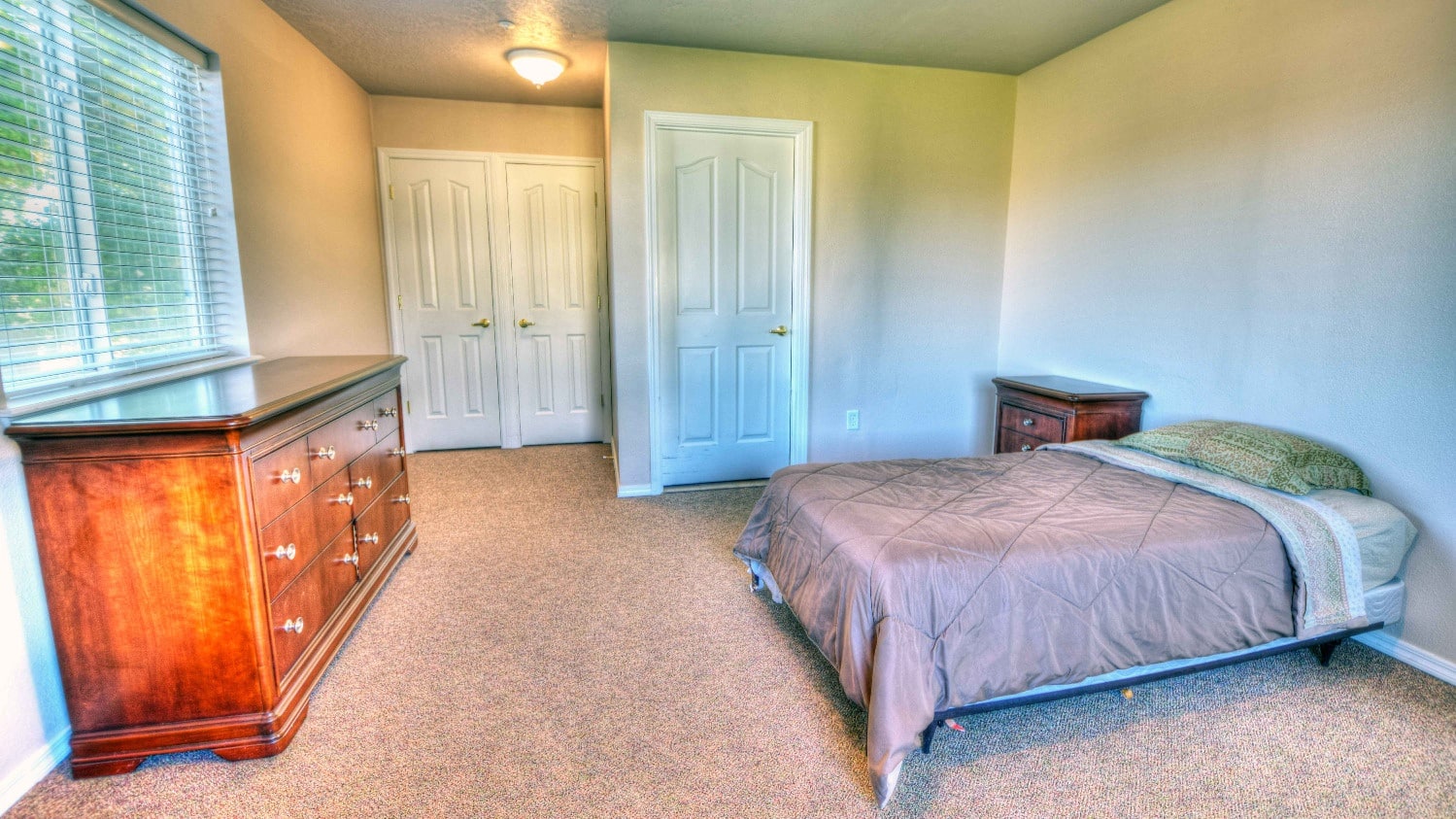
The little scale also supports more responsive behavior management. A resident who ends up being agitated in the late afternoon can be strolled into a peaceful bedroom or yard within seconds, without browsing long hallways or awaiting an available employee to react from another wing.
Comparing small homes to large assisted living and memory care communities
Both small homes and large neighborhoods exist along a quality spectrum. I have actually seen beautifully run large memory care communities and inadequately handled small homes, and vice versa. Still, there are intrinsic trade-offs households should understand.
Here is a basic way to compare them:
- Small senior care homes frequently master customized attention, continuity of caregivers, and a calm environment. They can feel more like an extended household than a facility.
- Large assisted living and memory care neighborhoods can use more facilities, such as on-site physical treatment, salon services, transportation, and a more comprehensive menu of structured activities.
- Small homes may be quicker to discover subtle changes in habits or health, due to the fact that staff know each resident's baseline intimately.
- Large settings usually have more noticeable management existence on-site, multiple layers of supervision, and simpler access to certified nurses throughout company hours.
- Small homes have actually restricted capability, so if a resident's requirements escalate unexpectedly, there may be less flexibility. Larger settings may have transitional systems or more personnel to soak up increased care demands.
Cost can be surprisingly comparable. A private space in a high-end large memory care facility might cost more than a shared room in a small home, but many midrange small homes rate in the same ballpark as midrange assisted living neighborhoods in the very same market. Local property costs, staffing incomes, and level of care all influence the last figure.
The medical side: dementia care in a little setting
For families, the big concern is typically not looks. It is whether a little home can truly handle the scientific complexity of dementia care over time.
Medication management is central. In reliable small homes, caretakers are trained to administer medications, track refills, and display for negative effects. Some homes utilize electronic medication administration records; others use well-organized paper systems that are examined routinely by a nurse or pharmacist. The smaller sized census makes it much easier to notice if Mrs. L skips her night pills or if Mr. J appears more drowsy after a dose change.
Chronic conditions such as heart problem, COPD, diabetes, and arthritis prevail alongside dementia. A senior care strong little home will have clear protocols for monitoring weights, blood sugar level, or oxygen use, and will coordinate with outdoors home health or hospice services as required. In numerous states, checking out nurses and therapists can see residents on-site in these homes, which assists prevent disruptive trips to clinics.
Behavioral signs of dementia are often where the difference in setting ends up being most obvious. When someone starts to pace, call out, or resist care, a caretaker in a little home can adjust the environment almost instantly: alter the lighting, close a noisy TV, shift to a quieter room, or step outdoors for fresh air. These nonpharmacologic methods are the structure of excellent dementia care, and they depend greatly on staff knowing each person's history, preferences, and triggers.
Medication for agitation or psychosis has its place, particularly when safety is at stake, however many clinicians try to keep doses as low as possible. Personnel who see the exact same eight residents every day are typically better positioned to observe patterns such as "he gets agitated when his brother leaves" or "she screams more when the news is on" and to adjust routines accordingly.
There are limits. Some little homes, particularly those with very little nursing oversight, may deal with homeowners who have regular medical crises, complex injury care, or intense behavioral symptoms such as aggressive striking or duplicated unsafe wandering. An excellent operator will be sincere about those limits and will not handle locals they can not support.
The emotional experience for families
Families often describe small senior care homes as "less overwhelming." The car park is smaller sized. The front door might have a wreath or a welcome mat rather of a reception desk. You can normally walk directly into the kitchen and smell what is cooking.
That said, the intimacy of a small setting cuts both ways. There is less privacy. If you are unhappy with something, your feedback goes straight to the exact same handful of personnel taking care of your parent every day. In a big center, grievances may route through an official grievance process or a remote business office. In a small home, they tend to be face to face.
What families typically value most is connection. The caretaker who bathes your mother in March is most likely the very same one who will be holding her hand throughout a breathing infection in November. That continuity constructs trust over time. It also decreases the opportunity of repeated "being familiar with you" cycles that can be so hard on a person with memory loss.
However, small homes are more susceptible to staff disturbances. If 2 veteran caretakers quit, the culture of the house can move rapidly. Households need to focus not only to the owner or supervisor, but likewise to the front-line staff who run the daily routine.
When a small senior care home is a good fit
Small homes can be an exceptional choice for specific situations. Households who tend to be happiest with this design often share some of these conditions:
- The individual with dementia is overwhelmed by crowds, noise, or complex environments and does better with fewer people around.
- The household values relationship-based care over features. They care more about consistent caretakers and flexible routines than about on-site health clubs or a packed activity calendar.
- The person does not have constant, high-intensity nursing requirements, such as ventilator assistance or sophisticated injury care that really require a knowledgeable nursing facility.
- The family wants to be carefully included, visiting typically and teaming up with personnel on choices, history, and approaches.
- Cultural or language alignment is very important, and they find a home where personnel share a familiar background, food customs, or main language.
In these situations, the home-like environment supports staying abilities while buffering some of the confusion dementia brings.
When a little home may not be the best choice
There are likewise clear circumstances where a larger assisted living, specialized memory care unit, or nursing home might be safer or more practical.
If the individual has extremely unsteady medical conditions, needs frequent on-site doctor evaluation, or requires customized devices kept track of around the clock, a setting with on-site nursing and closer medical oversight might be nonnegotiable.
Some individuals with dementia preserve high physical energy and need comprehensive space for safe roaming, several activity stations, and structured programs to reduce agitation. A very little home with restricted indoor and outside space can feel confining for them.
Finances can tip the scale, too. Some big facilities participate in Medicaid waiver programs that cover memory care after personal funds are depleted. Many little homes, specifically those with less citizens, run almost entirely on private pay and might decline Medicaid at all. Families who prepare for requiring public funding in the foreseeable future need to factor this into their preparation from the start.
Finally, location matters. In some areas, little homes are plentiful and well-regulated. In others, choices are sporadic or quality is inconsistent. A premium big community near to household will often be much better than an average small home an hour away.
How to assess a little senior care home for dementia care
Families frequently tell me they feel less daunted strolling into a house than into a big structure with badges and ID scanners. That comfort can be positive, however do not let it change a cautious assessment.
Here is a focused checklist to guide your visits:
- Observe the rhythm of the day. Are citizens engaged, clean, and calmly inhabited, or do you see individuals dropped in wheelchairs with tvs blaring?
- Ask specific concerns about dementia training and experience. How do staff manage roaming, refusal of care, or sundowning? Listen for concrete examples, not vague reassurance.
- Check staffing patterns all the time. Who is on-site overnight? The number of caregivers exist for the variety of homeowners in the evening and on weekends?
- Clarify what happens as requirements increase. At what point would the home ask a resident to transfer to a higher level of care? How do they involve hospice or home health?
- Review communication regimens. How often will you receive updates? Whom do you call after hours? What occurs if there is a fall or a medication error?
Trust your senses. A modest home with slightly used furniture can still provide excellent care, while a magnificently embellished home can conceal lack of organization or burnout. Pay attention to how staff speak about residents when they believe you are not listening, how quickly call bells or demands are addressed, and whether residents deal with staff by name with comfort or fear.
The role of respite care in little homes
Respite care is typically neglected, yet it can be a lifeline for households taking care of a loved one with dementia in your home. Numerous little homes offer short-term stays of a few days to a few weeks. This gives the main caregiver a possibility to rest, travel, or manage their own health requirements while their loved one receives expert support.
Short-term remains in a small setting have specific advantages for individuals with memory loss. The environment is much easier to discover in a few days, and the same caretakers connect with the individual consistently, which constructs familiarity rapidly. I have had households utilize respite in a small home a number of times a year, partially to rest, however also to slowly present their loved one to the setting in case an irreversible relocation ends up being required later.
For some, respite stays become a trial period. The household sees how their loved one reacts to the little home, how personnel interact, and whether everyday routines are really personalized. If the trial works well, transitioning to full-time residency feels less abrupt.
Integrating little homes into a more comprehensive care strategy
Choosing a little senior care home for Alzheimer's or dementia care is not an isolated choice. It must suit a broader strategy that includes medical care, legal and financial preparation, and family expectations.
Primary care physicians and neurologists remain crucial partners, even after a move. The very best little homes will collaborate closely with outside clinicians, sending out timely notes about changes in habits, appetite, sleep, or falls. Households who remain active in medical visits, either personally or through telehealth, help ensure that the medical side of dementia care equals the everyday living support the home provides.
Legal and monetary planning ought to ideally occur well before a relocation. Powers of lawyer for healthcare and finances, advance regulations, and practical budgeting for the full course of the illness are just as essential whether your loved one lives in a little home, a big assisted living community, or with family.
Finally, families should change their own expectations. A move to a small senior care home does not end the family's function. It changes it. Instead of hands-on bathing or constant guidance, the function moves towards advocacy, emotional support, and partnership with expert caregivers. The smaller sized size of the home can make that collaboration feel more like shared stewardship than like browsing a large bureaucracy.
A gentler technique, not a perfect one
Alzheimer's and other forms of dementia do not lend themselves to easy responses. There is no ideal setting, just better and even worse matches for a particular individual at a particular time.
Small senior care homes add a crucial alternative to the landscape of senior care, assisted living, and memory care. Their scale permits a quieter, more relational design of dementia care that lots of people find deeply humane. They can use a haven of connection in a disease defined by loss and change.
Yet they are not a magic solution. Their success depends on the integrity of the owner, the stability and training of staff, and reasonable positioning between resident needs and the home's abilities. Families who stroll in with clear eyes, ask particular questions, and remain engaged with time are most likely to discover in these homes what they most wish for: security, self-respect, and familiar kindness for somebody they love.
BeeHive Assisted Living Homes of Rio Rancho NM #1 - Dementia Care & Memory Care provides assisted living care
BeeHive Assisted Living Homes of Rio Rancho NM #1 - Dementia Care & Memory Care provides memory care services
BeeHive Assisted Living Homes of Rio Rancho NM #1 - Dementia Care & Memory Care provides respite care services
BeeHive Assisted Living Homes of Rio Rancho NM #1 - Dementia Care & Memory Care supports assistance with bathing and grooming
BeeHive Assisted Living Homes of Rio Rancho NM #1 - Dementia Care & Memory Care offers private bedrooms with private bathrooms
BeeHive Assisted Living Homes of Rio Rancho NM #1 - Dementia Care & Memory Care provides medication monitoring and documentation
BeeHive Assisted Living Homes of Rio Rancho NM #1 - Dementia Care & Memory Care serves dietitian-approved meals
BeeHive Assisted Living Homes of Rio Rancho NM #1 - Dementia Care & Memory Care provides housekeeping services
BeeHive Assisted Living Homes of Rio Rancho NM #1 - Dementia Care & Memory Care provides laundry services
BeeHive Assisted Living Homes of Rio Rancho NM #1 - Dementia Care & Memory Care offers community dining and social engagement activities
BeeHive Assisted Living Homes of Rio Rancho NM #1 - Dementia Care & Memory Care features life enrichment activities
BeeHive Assisted Living Homes of Rio Rancho NM #1 - Dementia Care & Memory Care supports personal care assistance during meals and daily routines
BeeHive Assisted Living Homes of Rio Rancho NM #1 - Dementia Care & Memory Care promotes frequent physical and mental exercise opportunities
BeeHive Assisted Living Homes of Rio Rancho NM #1 - Dementia Care & Memory Care provides a home-like residential environment
BeeHive Assisted Living Homes of Rio Rancho NM #1 - Dementia Care & Memory Care creates customized care plans as residents’ needs change
BeeHive Assisted Living Homes of Rio Rancho NM #1 - Dementia Care & Memory Care assesses individual resident care needs
BeeHive Assisted Living Homes of Rio Rancho NM #1 - Dementia Care & Memory Care accepts private pay and long-term care insurance
BeeHive Assisted Living Homes of Rio Rancho NM #1 - Dementia Care & Memory Care assists qualified veterans with Aid and Attendance benefits
BeeHive Assisted Living Homes of Rio Rancho NM #1 - Dementia Care & Memory Care encourages meaningful resident-to-staff relationships
BeeHive Assisted Living Homes of Rio Rancho NM #1 - Dementia Care & Memory Care delivers compassionate, attentive senior care focused on dignity and comfort
BeeHive Assisted Living Homes of Rio Rancho NM #1 - Dementia Care & Memory Care has a phone number of (505) 221-6400
BeeHive Assisted Living Homes of Rio Rancho NM #1 - Dementia Care & Memory Care has an address of 204 Silent Spring Rd NE, Rio Rancho, NM 87124
BeeHive Assisted Living Homes of Rio Rancho NM #1 - Dementia Care & Memory Care has a website https://beehivehomes.com/locations/rio-rancho/
BeeHive Assisted Living Homes of Rio Rancho NM #1 - Dementia Care & Memory Care has Google Maps listing https://maps.app.goo.gl/FhSFajkWCGmtFcR77
BeeHive Assisted Living Homes of Rio Rancho NM #1 - Dementia Care & Memory Care has Facebook page https://www.facebook.com/BeeHiveHomesRioRancho
BeeHive Assisted Living Homes of Rio Rancho NM #1 - Dementia Care & Memory Care has a YouTube Channel at https://www.youtube.com/@WelcomeHomeBeeHiveHomes
BeeHive Assisted Living Homes of Rio Rancho NM #1 - Dementia Care & Memory Care won Top Memory Care Homes 2025
BeeHive Assisted Living Homes of Rio Rancho NM #1 - Dementia Care & Memory Care earned Best Customer Service Award 2024
BeeHive Assisted Living Homes of Rio Rancho NM #1 - Dementia Care & Memory Care placed 1st for Assisted Living Communities 2025
People Also Ask about BeeHive Assisted Living Homes of Rio Rancho NM #1 - Dementia Care & Memory Care
What is BeeHive Homes of Rio Rancho Living monthly room rate?
The rate depends on the level of care that is needed (see Pricing Guide above). We do a pre-admission evaluation for each resident to determine the level of care needed. The monthly rate is based on this evaluation. There are no hidden costs or fees
Can residents stay in BeeHive Homes of Rio Rancho until the end of their life?
Usually yes. There are exceptions, such as when there are safety issues with the resident, or they need 24 hour skilled nursing services
Does BeeHive Homes of Rio Rancho have a nurse on staff?
No, but each BeeHive Home has a consulting Nurse available 24 – 7. if nursing services are needed, a doctor can order home health to come into the home
What are BeeHive Homes of Rio Rancho visiting hours?
Visiting hours are adjusted to accommodate the families and the resident’s needs… just not too early or too late
Do we have couple’s rooms available?
Yes, each home has rooms designed to accommodate couples. Please ask about the availability of these rooms
Where is BeeHive Homes of Rio Rancho located?
BeeHive Homes of Rio Rancho is conveniently located at 204 Silent Spring Rd NE, Rio Rancho, NM 87124. You can easily find directions on Google Maps or call at (505) 221-6400 Monday through Friday 9:00am to 5:00pm
How can I contact BeeHive Homes of Rio Rancho?
You can contact BeeHive Assisted Living Homes of Rio Rancho NM #1 - Dementia Care & Memory Care by phone at: (505) 221-6400, visit their website at https://beehivehomes.com/locations/rio-rancho, or connect on social media via Facebook or YouTube
Take a short drive to Joe's Pasta House - Rio Rancho . Joe’s Pasta House offers comfort food in a welcoming setting that supports assisted living, memory care, senior care, elderly care, and respite care dining visits.